There is a contradiction at the heart of America's approach to China, and it is becoming harder to disguise. The Trump administration wants Chinese companies gone from American soil, pushed out of factories, power grids, and supply chains on grounds of security and self reliance. Yet it also wants the technology those same companies command, in batteries, solar panels, and electric vehicles, where China has built a lead the rest of the world cannot easily match. The result is an awkward sort of divorce, one where America keeps the house and asks the departing partner to leave the keys.
Why the technology is so hard to give up
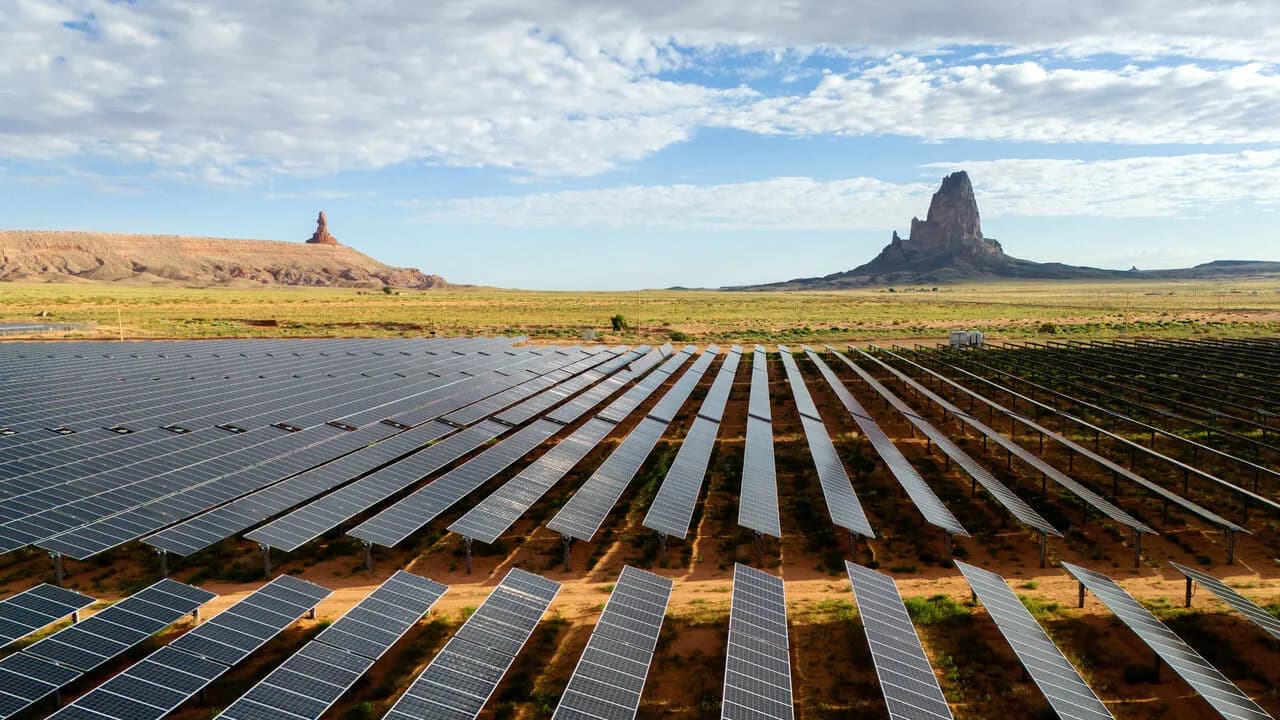
For years China poured money and patience into the industries that will power a cleaner economy. It now makes most of the world's solar panels and a commanding share of its batteries, often at prices Western rivals struggle to beat. A country that wants to build solar farms, electrify its cars, or store power on its grid cannot simply wish that dominance away. The cheapest and most advanced equipment, and the engineers who know how to make it, are largely Chinese.
That leaves Washington in a bind. Shutting out Chinese firms entirely would slow the very buildout America says it wants, raising costs and stalling projects. Welcoming them in clashes with the political drive to cut dependence on a strategic rival. So policy is settling into a middle path, take the technology, refuse the ownership.
The licensing workaround
The favoured tool is the licensing deal. Rather than letting a Chinese company build and run a plant on American soil, the arrangement has an American firm license the Chinese technology and operate the factory itself. The know-how crosses the border, the jobs and the control stay in American hands, and the Chinese partner collects fees rather than a controlling stake. It is a way to import the recipe without seating the chef in your kitchen.
For the Chinese side it is an uncomfortable bargain, but not a worthless one. A firm locked out of the American market by other means can still earn from its patents and processes. For Washington it offers a tidy story, factories on home ground, American workers, and a Chinese name kept safely off the door.
The catch nobody likes to mention
The trouble is that licensing rarely delivers true independence. Running a battery or solar line is not just a matter of owning a blueprint. It takes constant support, updates, spare parts, and the quiet expertise that lives in the company that invented the process. An American operator leaning on Chinese technology may find it still leans on Chinese engineers, suppliers, and goodwill, the very dependence the policy was meant to end.
There is a political risk too. Lawmakers who cheer the expulsion of Chinese firms may balk when they notice the technology inside the new American factory is Chinese all the same. A deal designed to look tough on China can be attacked as a backdoor that lets China profit and keep its hooks in. The line between shrewd and hypocritical is thin, and easy to cross.
A wider pattern
This is not really about one industry. It is a glimpse of how a divided world economy might actually function, where rivals refuse to depend on each other yet cannot fully pull apart. Outright bans are blunt and costly. Pure openness is politically dead. What is left is a messy in between, partial walls with doors cut into them, where governments try to capture the benefits of a rival's strength while denying it the influence that usually comes with it.
Whether America can pull off that trick is far from certain. Holding on to a technology while expelling the people and companies who master it is a delicate act, and the history of such schemes is mixed. For now the strategy buys time and a useful headline. The harder question, whether a country can keep the fruit of a rival's decades of investment without paying for the tree, is one Washington has not yet answered.