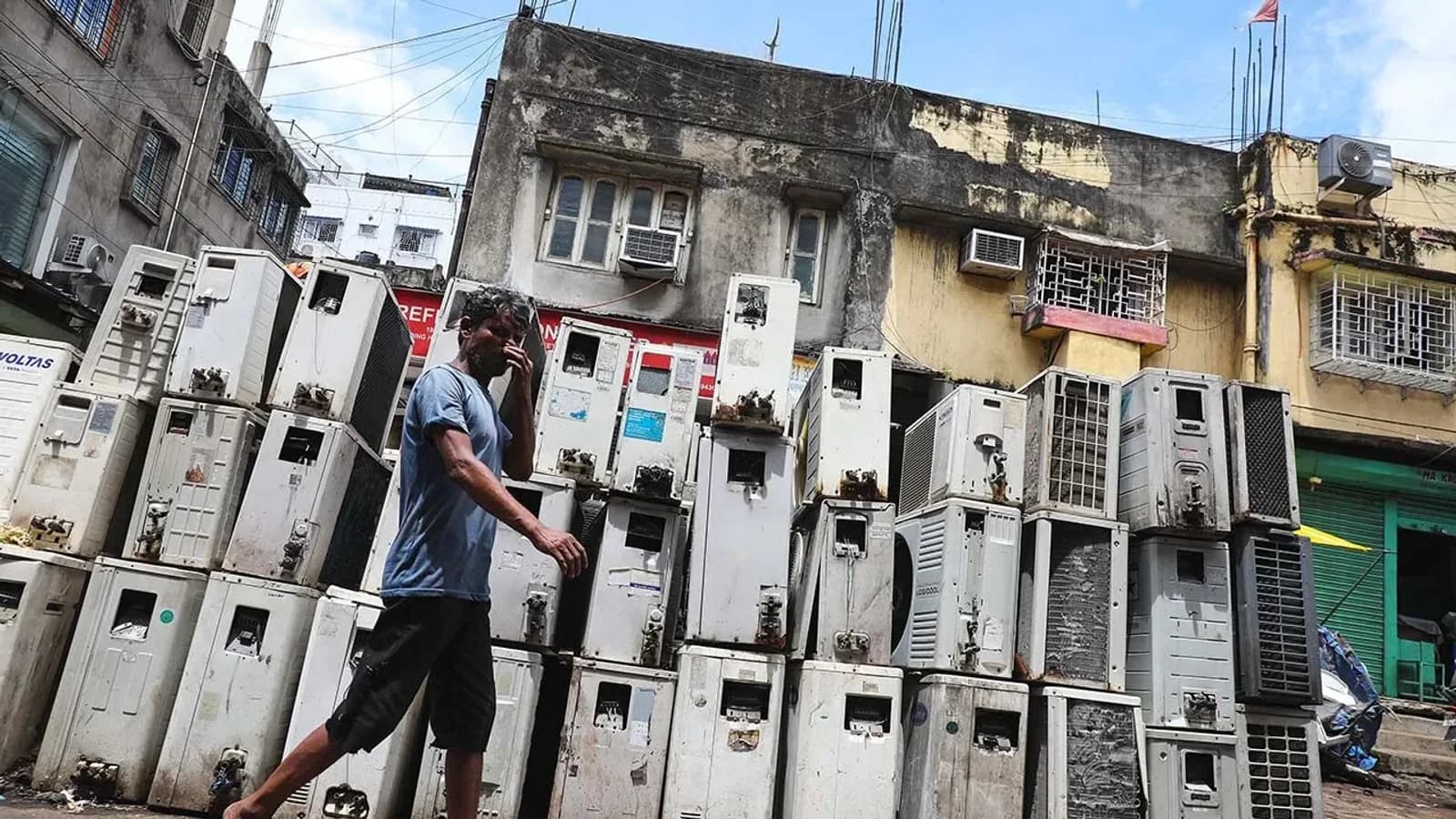
An air conditioner is an easy thing to take for granted. It hums in a window, drops the temperature by a few degrees and asks for nothing but electricity in return. Yet stacked together by the hundreds of millions, these unremarkable boxes are becoming one of the most consequential technologies on the planet, reshaping energy systems, trade flows and the balance of power between nations. The scramble to keep cool has quietly turned into a contest, and the world has barely noticed.
The demand is exploding where the heat is worst and the money is newest. Global sales reached around 200 million units in a single recent year, with growth of roughly 10 percent in India and 40 percent or more across parts of Latin America and Africa. The industry that supplies them was worth about 50 billion dollars a couple of years ago and is expanding at a steady clip, with the Asia Pacific region alone accounting for more than three fifths of the money. Cooling has stopped being a luxury of rich temperate countries and become an aspiration of hot poor ones.
The heat feedback loop
This is where the trouble begins, because cooling the indoors warms the outdoors. Air conditioners run on electricity, much of it still made by burning fossil fuels, and they leak refrigerant gases that trap heat far more effectively than carbon dioxide. The hotter the world grows, the more machines people install, and the more they run, which warms the world further still. It is a feedback loop with a meter attached, and the meter is spinning faster every year.
The projections are sobering. On current trends the electricity the world burns simply to stay cool could more than triple by the middle of the century, eventually drawing as much power as all of China and India consume today for everything. More than four fifths of that future growth will come from emerging and developing economies, the very places whose grids are already strained. India is the sharpest example, its energy demand for cooling climbing about 13 percent a year since 2000, the fastest rate anywhere on earth.
Made in China
If cooling is becoming a strategic good, one country has quietly cornered it. China now produces something like 208 million air conditioners a year, more than half of everything the world makes, from a dense manufacturing cluster concentrated in a few southern provinces. Guangdong alone ships more than half of the country's exports, its factories, component makers and refrigerant producers packed close enough together to move at a speed no rival can match.
The dominance runs deeper than the finished box. The compressor is the heart of an air conditioner, the single costliest part, and here Chinese firms are close to indispensable. A handful of them, the compressor arms of giants such as Gree and Midea alongside the specialist maker Highly, shipped nearly 300 million rotary compressors in a single year. Any country that wants to cool its citizens, and increasingly that means every country, depends on a supply chain that runs through China. In a warming century, that is a form of leverage as real as control over oil or microchips.
The war over what goes inside
A second contest is being waged over the gases that make the whole thing work. The refrigerants that circulate inside these machines are potent greenhouse agents, and the world has agreed, in fits and starts, to phase down the worst of them. The Kigali Amendment to the Montreal Protocol, now backed by close to 150 countries, aims to retire the most damaging hydrofluorocarbons, a shift that on its own could shave as much as half a degree of warming off the century's total.
Behind that worthy goal sits a hard commercial fight. Retiring an old refrigerant means adopting a new one, and the companies that hold the patents on the next generation of coolants stand to earn handsomely while everyone else pays to catch up. The transition is at once an environmental necessity and a redistribution of industrial advantage, and the countries that lead the chemistry will set the terms for those that follow.
Comfort and its discontents
Underneath the trade and the treaties lies a starker question of fairness. Air conditioning is no longer merely about comfort. In a world of lengthening heatwaves it is increasingly about survival, and access to it is dividing along familiar lines. The rich cool their homes, offices and cars without a second thought, while hundreds of millions of people in the hottest regions cannot afford a single unit or the power to run it. The same heat that makes cooling essential is most punishing precisely where it is least available.
That gap turns a household appliance into a matter of statecraft. Governments that can guarantee affordable cooling will keep their cities livable and their populations calm through summers that would once have been unthinkable. Those that cannot will face grids buckling under peak demand, blackouts at the worst possible moment and citizens with nowhere to escape the heat. Cooling is becoming a test of competence that voters will notice.
The quiet contest
None of this arrives with the drama of a trade war or a naval standoff, which is exactly why it is so easily missed. The geopolitics of air conditioning plays out in factory clusters, patent filings, treaty annexes and electricity tariffs rather than in headlines. Yet the stakes are enormous. As the planet warms, the ability to keep people cool will shape which economies keep functioning, which supply chains hold the whip hand and which governments survive the summer. The humble box in the window has become a piece on the board of global power, and the game around it has already begun.