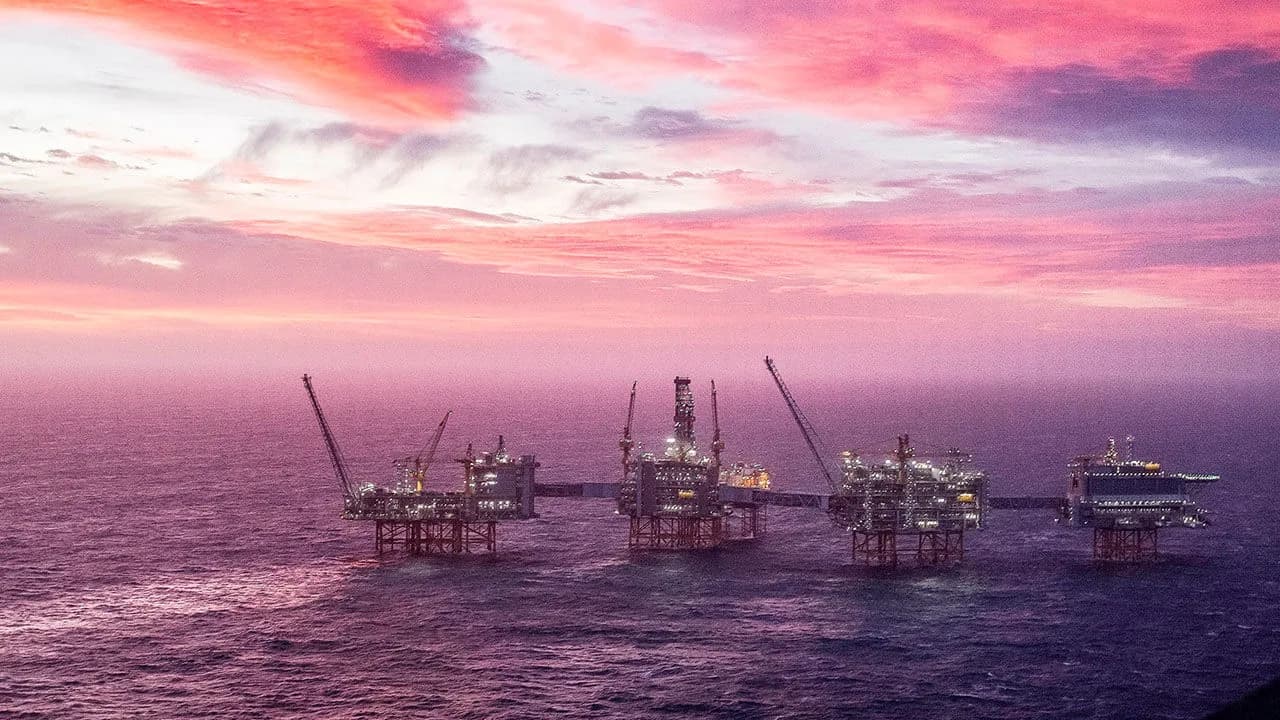
When missiles fly in the Middle East, the gains rarely land in the calm waters of the North Sea. This time they have. The conflict between Israel, the United States, and Iran has pushed up the price of oil and gas, and few companies have felt the lift as clearly as Equinor, the energy giant majority owned by the Norwegian state. A war fought thousands of miles away has quietly become good business for Oslo.
Why prices moved
The logic is familiar. When traders fear that fighting could choke the flow of oil through the Strait of Hormuz, the narrow channel that carries a large share of the world's crude, they bid up the price of every barrel, wherever it comes from. Gas, increasingly priced in step with oil and with global politics, followed. For a producer like Equinor, which sells into that market every day, even a temporary jump in prices flows almost straight to the bottom line.
Norway's quiet rise
Equinor's good fortune sits on top of a deeper shift. Since Russia cut most of its pipeline gas to Europe, Norway has become the continent's single most important supplier of the fuel, sending it west through pipelines under the sea. That role already made Equinor central to Europe's energy security. The latest crisis has reminded buyers in Berlin, Paris, and beyond just how much they lean on a steady, friendly producer to the north.
A windfall for the state
Because the Norwegian government holds the largest stake in Equinor and taxes its profits heavily, the company's gains are the country's gains. Higher energy revenue feeds Norway's enormous sovereign wealth fund, the pool of savings built from decades of oil and gas money and now among the largest investment funds on earth. In effect, a spike in war risk abroad tops up the long term savings of one of the world's wealthiest nations.
The awkward timing
The windfall arrives at an uncomfortable moment. Equinor has spent years presenting itself as a company in transition, promising to pour money into wind, hydrogen, and other low carbon ventures. More recently it has trimmed those ambitions and leaned back toward the oil and gas that still pay the bills. A price surge driven by conflict rewards exactly that retreat, handing the firm a reason to keep drilling at the very moment it had pledged to drill less.
Profiting from danger
None of this is comfortable to celebrate. Norway has long wrestled with the gap between its green self image and its status as a major exporter of fossil fuels. Earning more because a war threatens to disrupt energy supply only sharpens that contradiction. Equinor cannot be blamed for the conflict, and its gas genuinely helps keep Europe warm, yet there is no clean way to book a profit that flows, however indirectly, from the threat of violence.
How long it lasts
The bigger question is whether the boost endures. Prices driven by fear tend to fall back once the fear fades, and a single ceasefire or a calmer week of headlines can erase much of the gain. Equinor has seen this cycle before and knows how fast a windfall can drain away. Its deeper advantage, a place at the heart of Europe's gas supply, looks far more durable than any war premium.
What it means for Europe
For European governments the episode carries a lesson they keep relearning. Energy security is not a problem solved once but a balance held under constant pressure, and the cost of getting it wrong shows up fast when conflict flares. Norway and Equinor offer Europe a relatively safe harbour, yet reliance on any single supplier, even a trusted one, is its own kind of risk. The war that lifted Equinor is also a reminder of how exposed the continent remains.