For all the talk of a slowing China, one thing about the country has barely changed. Its people still work astonishingly hard. Offices stay lit late into the night, factories run around the clock, and a culture that prizes long hours remains woven into daily life. While much of the rich world has drifted toward shorter weeks and a sharper line between work and rest, China keeps grinding, and that grind is still one of the engines of its power.
The hours behind the rise
Hard work has been central to the China story from the start. Hundreds of millions of people lifted themselves out of poverty in a single generation by putting in long days in fields, on building sites, and on assembly lines. The habit stuck as the economy grew richer. Today the average Chinese worker still clocks far more hours each year than a counterpart in Europe or America, and in many industries the gap is widening rather than closing.
A culture of long days
Nowhere is this clearer than in the technology sector, where a punishing schedule once had its own slogan, a system of working from nine in the morning to nine at night, six days a week. Officially such hours are frowned upon, and courts have ruled some of them illegal, yet the expectation lingers. Ambitious young workers fear that easing off will cost them a promotion or a job, so they stay at their desks. The pressure flows from the top of companies down to the newest recruit.
Why the West stepped back
The contrast with the West is stark, and it is not an accident. As countries grow wealthier, their people usually choose to trade some income for more free time, and governments pass laws to protect rest, holidays, and family life. That is broadly what happened across Europe and, to a lesser degree, America over the past century. China is wealthier than it was, but it has not yet made that trade on anything like the same scale, and its workers still lean heavily toward labour over leisure.
The edge it buys
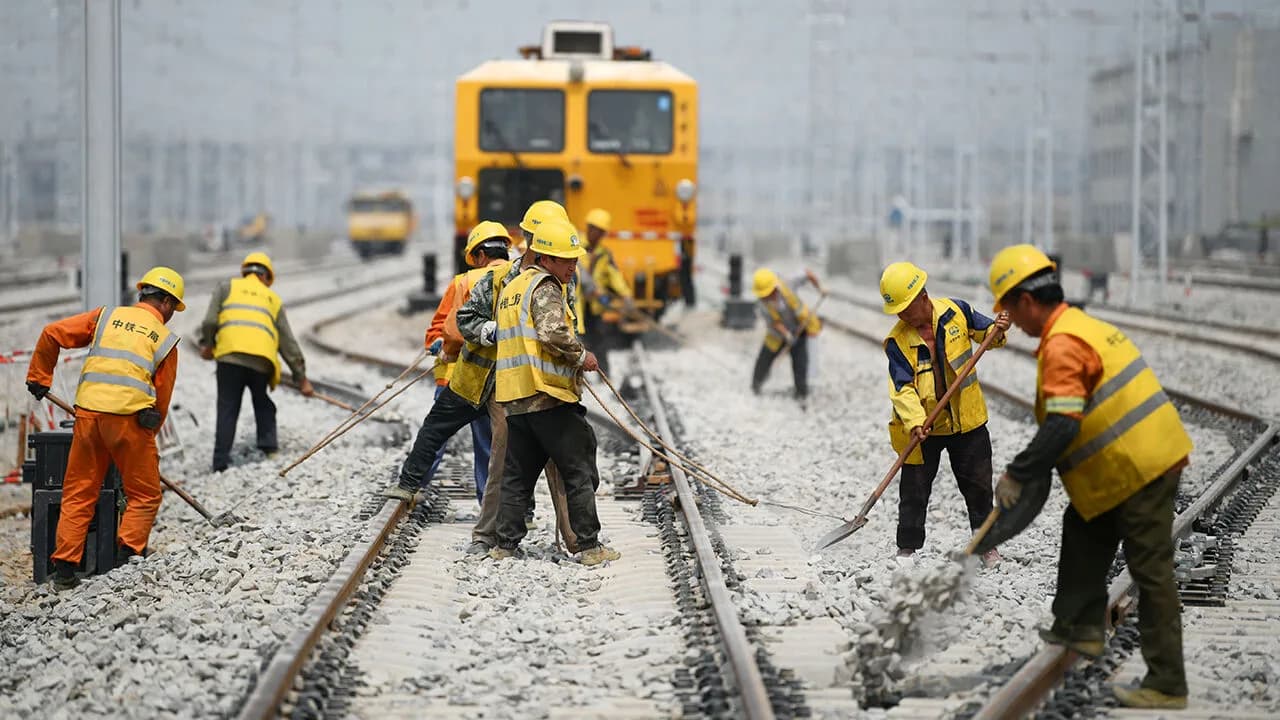
All those extra hours add up to a genuine advantage. More work means more output, faster construction, and quicker turnarounds, which helps explain how China builds railways, factories, and entire districts at a speed that astonishes foreign visitors. In fast moving industries, the willingness to push a product out the door while rivals are still resting can decide who wins a market. For now, sheer effort remains one of the country's sharpest competitive weapons.
The mounting cost
Yet the grind is taking a toll. Reports of exhaustion, burnout, and even deaths linked to overwork have stirred public anger, and a quiet backlash has taken hold among the young. Some have embraced the idea of lying flat, a gentle refusal to chase status through endless toil. Others speak of letting things rot, a weary shrug at a race they no longer believe they can win. The state, which depends on hard work yet fears unrest, watches these moods nervously.
The demographic clock
Time is working against the model in another way. China is ageing fast, and its workforce has begun to shrink, which means fewer people will have to carry an economy that long relied on having more hands every year. Squeezing extra hours from a falling number of workers is a poor substitute for the rising tide of labour that once powered growth. Sooner or later, effort alone cannot make up for the missing millions.
What comes next
The deeper question is whether China can keep its edge without burning out the people who provide it. Working harder than everyone else has carried the country a remarkable distance, but it is a strategy with a ceiling, and the strains are beginning to show. The future may belong less to the nation that simply works the longest and more to the one that works the smartest. Whether China can make that shift, while a tired younger generation pushes back, is among the most important questions hanging over its economy.