When people picture the companies getting rich from artificial intelligence, they tend to think of the firm that makes the chips doing the thinking. Yet a quieter business is riding the same wave, and its latest results are staggering. Micron Technology, an American maker of memory chips, reported that quarterly revenue had surged 346 percent from a year earlier, sending its shares up around 15 percent in after hours trading. The reason can be summed up in three letters that almost no one outside the industry knows, HBM.
The memory that AI cannot live without
High bandwidth memory, or HBM, is the unglamorous hero of the AI boom. It works by stacking memory chips on top of one another and threading them together with microscopic wiring, so data can move at extraordinary speed. That speed is the whole point. Training a large language model means shuttling billions of pieces of data every second between the processor that does the calculating and the memory that holds the numbers. Without fast enough memory, even the mightiest AI chip sits idle, waiting.
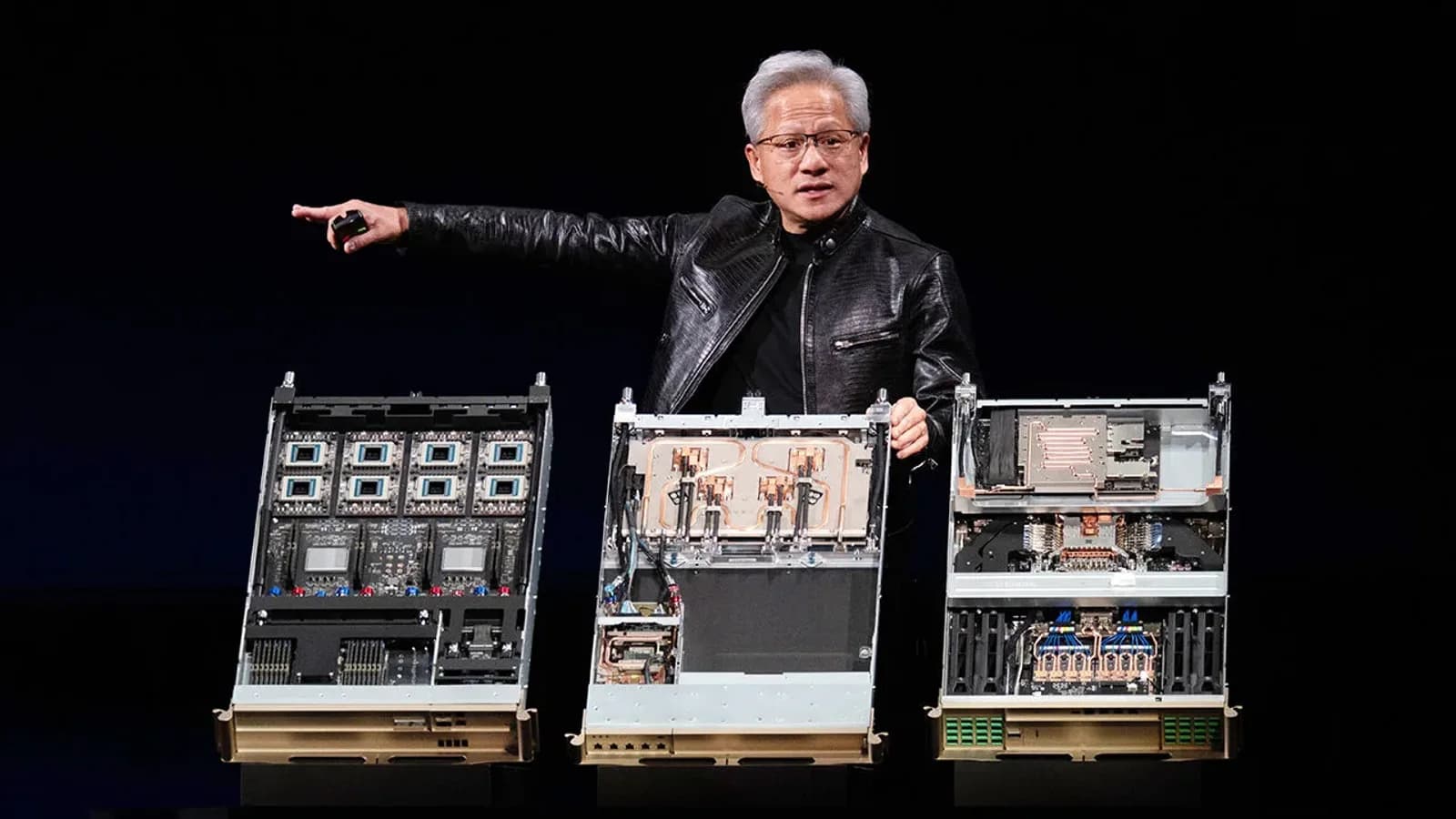
Micron's newest part, HBM4, was built for exactly this job. Released earlier in the year, it was designed to slot into Nvidia's next generation platform, the hardware that powers systems like the chatbots millions now use daily. In other words, every time a company builds a new AI data centre, it needs not only Nvidia's processors but a matching pile of Micron style memory to feed them.
A shortage that prints money
What makes the business so lucrative right now is scarcity. HBM is fiendishly hard to manufacture, and only a handful of firms can produce it at scale. Demand from AI builders has run far ahead of supply, and when something everyone needs is in short supply, the price takes care of itself. That is why a memory maker, in a business long known for brutal boom and bust cycles, is suddenly posting the kind of growth normally reserved for the hottest software startups.
The wider market noticed. Coming after a jittery stretch for technology stocks, Micron's numbers helped steady nerves and lifted futures across the major indices. To investors hunting for proof that the AI spending wave is real and not just hype, a memory supplier tripling its sales is about as concrete as evidence gets.
A three horse race
Micron sits in a rare position. It is one of only three big memory makers in the world, alongside South Korea's Samsung and SK Hynix, and the trio together control roughly 95 percent of global production of DRAM, the standard memory inside computers and phones. Of the three, Micron is the only one based in the United States, which gives it added importance at a time when governments are anxious about where their critical chips are made.
That small club is part of the appeal. With so few players able to make advanced memory, the firms that can are shielded from the swarm of competitors that erodes profits in most of the tech world. The barrier to entry is measured in years and billions of dollars, not months.
From a dental office to the AI age
There is a nice symmetry to Micron's moment. The company was founded back in 1978 in the basement of a dental office in Boise, Idaho, by a small group of cofounders including a pair of twin brothers, with a modest cheque from local businessmen. It went public a few years later as a scrappy outsider in a field dominated by giants. Nearly half a century on, that same company finds itself at the centre of the most important technology shift of the era.
The open question is how long the windfall lasts. Memory has always been a cyclical business, where today's shortage becomes tomorrow's glut as rivals race to add capacity. For now, though, the demand for AI looks nowhere near satisfied, and the firms that supply its memory are enjoying a rare stretch where they cannot make enough to keep up. As one Wall Street watcher put it, the AI revolution is still only in the third inning.