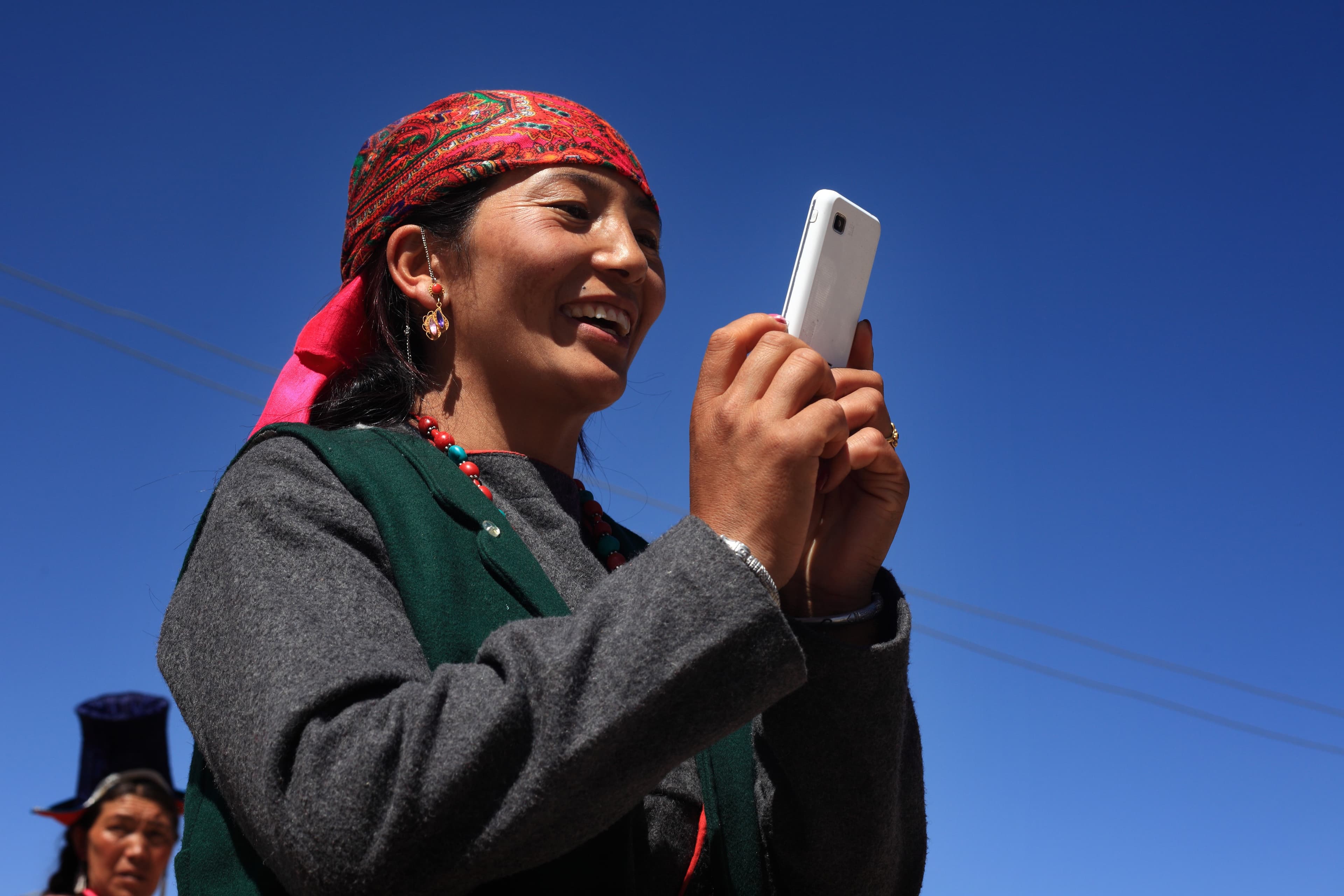
Walk into almost any village in India today and you will see the same thing you would see in Mumbai or Delhi, namely a phone held close to the face, a thumb scrolling through a feed. A decade ago this would have been unthinkable. The countryside, home to most of the country's people, was the place the digital economy had not yet reached. That gap is closing fast, and the change it is bringing to rural life is bigger than anything the cities have felt.
How a price war put phones in every pocket
The story starts with the cost of getting online. When a new mobile operator flooded the market with cheap data several years ago, the price of a gigabyte fell to among the lowest in the world. Rivals had to match it or die. Almost overnight, the internet stopped being a luxury reserved for the well off and became something a farm labourer could afford on a daily wage. Handsets grew cheaper too, and second hand smartphones found their way into homes that had never owned a computer.
The result is a vast new population coming online for the first time, often skipping the desktop era entirely and meeting the internet through a small glowing screen. For many of these users the phone is not one device among many. It is their bank, their marketplace, their classroom, and their link to the wider world all at once.
Paying without cash
Nothing has spread faster than digital payments. A simple system that lets anyone send money from one phone to another, free and in seconds, has reached tea stalls, vegetable carts, and roadside repair shops far from any city. A printed code taped to a counter is now a common sight in places that have never had a bank branch. For small traders this means no fumbling for change and a record of every sale. For families it means money can travel home from a relative working in the city the moment it is earned.
AI arrives in the local language
The newest shift is artificial intelligence, and what makes it powerful in rural India is language. Most villagers do not speak English, and many read little of any language. A wave of tools now lets a farmer simply talk to a phone in his own tongue and get an answer back the same way. Ask about a crop disease, a fair price at the nearest market, or how to claim a government benefit, and a voice replies in plain words.
For people who were locked out of the written internet, this voice first approach is transformative. A woman who cannot read a form can still ask a question out loud and act on the reply. The barrier that mattered most, literacy, suddenly matters less.
What it means for the farm
Agriculture is where the gains are easiest to see. Farmers who once relied on a single trader's word now check prices across several markets before they sell. They watch weather forecasts before they sow. Some upload a photo of a sick plant and receive advice on what is wrong and what to spray. Better information does not turn a small plot into a large one, but it does shift a little power back toward the grower, who has long been the weakest link in the chain.
Health, learning, and the state in your hand
The phone is reshaping more than commerce. A villager with a fever can now consult a doctor by video without losing a day's wage to travel. Students reach lessons and exam preparation that no local school could offer. Pensions, food rations, and welfare payments increasingly arrive straight into a digital account, cutting out the middlemen who used to skim a share. Each of these services, taken alone, is modest. Together they amount to a state and an economy that finally reach the last village on the map.
The limits of the revolution
None of this is tidy. Signal still drops in remote valleys, and power cuts can leave a phone dark for hours. The same networks that carry useful advice also carry rumour and fraud, and rural users new to the internet are easy prey for scams. Women own phones at lower rates than men, so the benefits do not fall evenly. And a voice assistant that sounds confident can still be wrong, with real consequences for someone betting a harvest on its word.
Yet the direction of travel is clear. For the first time the tools that have long favoured the city dweller are landing in the hands of people who farm, herd, and trade far from the lights of the metro. The countryside is not catching up to the digital age so much as remaking it on its own terms, in its own languages, one phone at a time.