History rarely announces the moment a great power begins to slip. It tends to arrive disguised as a single bad week, a war that goes wrong, a currency that wobbles, a phone call from a creditor. For Britain that week came in the autumn of 1956, over a canal in Egypt. Ray Dalio, the investor who built Bridgewater Associates into the world's largest hedge fund, now wonders aloud whether the United States is living through a moment of the same kind.
What happened at Suez
The story is worth retelling, because the parallel rests on it. In late October 1956, after Egypt's leader Gamal Abdel Nasser nationalised the Suez Canal, Britain and France invaded alongside Israel to seize it back. On the ground the operation went more or less to plan. It was undone not by soldiers but by money. The United States refused to support the pound as it came under speculative attack and signalled it would block emergency loans, and within weeks Prime Minister Anthony Eden ordered a humiliating withdrawal.
The fallout went far beyond one canal. Allies stopped deferring to London, creditors took a harder look at British debt, and sterling's long century as the world's reserve currency began its slow retreat. Inside four years Britain had granted independence to Ghana, Malaya, Nigeria, and Cyprus. The empire did not collapse overnight, but everyone could suddenly see which way it was heading.
Dalio's uncomfortable comparison
Dalio's argument is that the ingredients of a Suez style turn are visible in America now. He points to the danger of allies and creditors losing confidence, the slow erosion of reserve currency status, the selling of government debt, and a currency that weakens over time, especially against gold. None of these on its own is fatal. The worry is that they are arriving together.
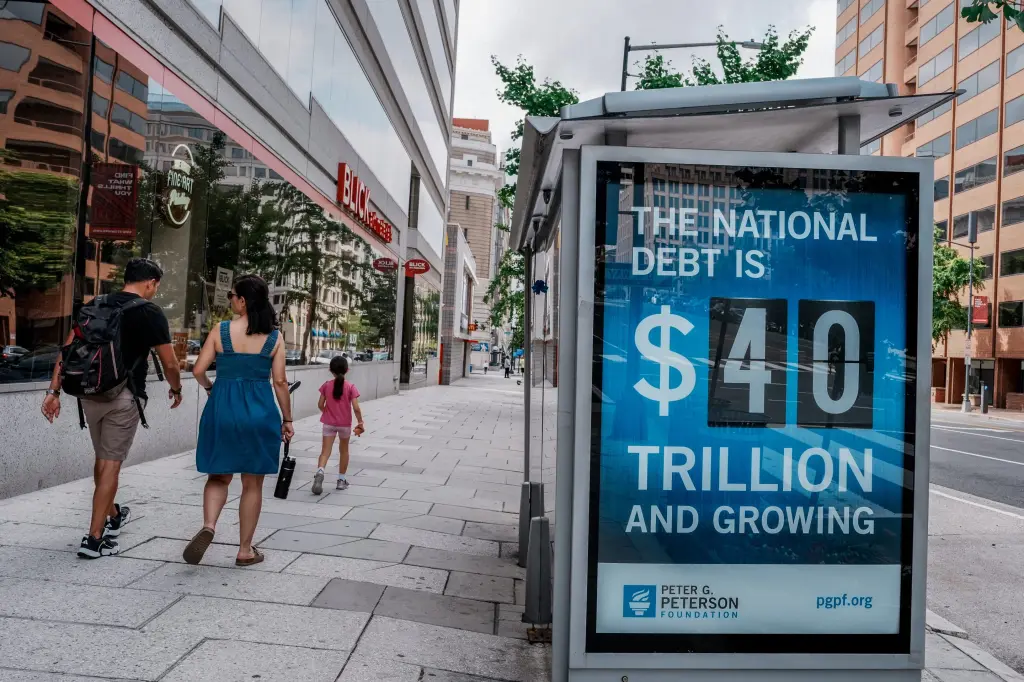
The numbers give the thesis its weight. American national debt crossed 39 trillion dollars in March 2026. The dollar's share of global foreign exchange reserves has drifted down to about 57 percent, its lowest since 1995 and well below the roughly 72 percent it commanded in 2001. All three major ratings agencies have now stripped the United States of a top grade, the most recent downgrade landing in 2025. Each fact is small. Stacked up, they describe a lender of last resort that the rest of the world trusts a little less each year.
The canal of our age is a strait
If Suez was the chokepoint of the 1950s, the Strait of Hormuz is its modern equivalent, and that is where Dalio draws the sharpest line. American and Israeli strikes on Iran that began earlier in the year did not end in the clean victory their planners imagined. By June the fighting had settled into stalemate, and negotiators were meeting in Qatar to reach an understanding that would simply reopen the strait to traffic. A deal to restore the status quo is a long way from the decisive win that was promised.
Hormuz matters because it is where the financial order becomes physical. The arrangement that ties global oil sales to the dollar, dating back to a quiet understanding with Saudi Arabia in the 1970s, has helped keep the greenback at the centre of world trade. A waterway that can be threatened, and a war that cannot be won outright, expose how much of that dominance rests on assumptions that can be tested.
Decline is slow, until it isn't
Dalio is careful not to predict collapse. Sterling took decades to fade after Suez, and the dollar has no obvious replacement waiting in the wings. What he describes is something subtler, the early stage of a reordering, when confidence starts to leak and the old certainties stop being automatic. He also notes a gap in motivation. For Iran's leadership the conflict felt existential, while for many Americans it was a distant matter crowded out by problems at home. That asymmetry of will, he suggests, is itself a sign of the times.
Whether the comparison holds is impossible to know from inside the moment, which is exactly the point. Britain did not feel its empire ending in 1956 either. The lesson of Suez is not that one bad war topples a giant overnight, but that it can quietly reveal a giant already on the way down. Dalio's warning is that the final reckoning, the moment it becomes clear who won and who lost, still lies somewhere ahead.