For most of the last century the brown truck was a symbol of certainty. If a package absolutely had to arrive, United Parcel Service was the name that put it there, a vast machine of drivers, planes, and sorting hubs that turned delivery into a science. That dominance no longer looks so secure. Its old rival FedEx is closing the gap, and in some races has pulled ahead, forcing the brown giant to ask an uncomfortable question, namely whether it is still the one to beat.
A rivalry as old as overnight shipping
The two companies have circled each other for decades. UPS built its empire on the ground, a dense web of routes and union drivers that could reach almost any address in America at low cost per parcel. FedEx made its name in the air, promising overnight delivery when that still sounded like magic. For years the division suited both. UPS owned the everyday ground game while FedEx owned speed and the premium that came with it.
That neat split has blurred. FedEx has poured money into its ground network, the cheaper and faster growing part of the business, and has worked to knit its once separate express and ground operations into a single, simpler system. The result is a competitor that increasingly fights UPS on its home turf rather than just in the skies.
The Amazon problem
Hanging over both firms is the giant they helped create. Amazon became one of the largest shippers in the world by leaning on UPS and FedEx, then quietly built a delivery arm of its own that now rivals them in sheer volume. Every van Amazon adds is a package the carriers do not get to move. UPS in particular grew heavily dependent on Amazon's business, and has since chosen to walk away from a large slice of those low margin parcels, betting that more profitable deliveries are worth more than raw volume.
It is a defensible bet, but a painful one. Giving up volume means emptier trucks and planes unless something fills them, and the fixed cost of a network built for peak demand does not shrink as quickly as the parcel count. FedEx, less tied to Amazon, has had more room to chase the business it wants on its own terms.
Costs, labour, and heavy machinery
Part of the squeeze is structural. UPS runs a heavily unionised workforce, and a hard fought labour deal lifted pay for hundreds of thousands of workers. Better wages are good for drivers, but they raise the cost of every stop at exactly the moment rivals are trying to undercut on price. To answer that, UPS has leaned into automation, closing and consolidating sorting hubs and pushing more parcels through highly mechanised facilities that need fewer hands.
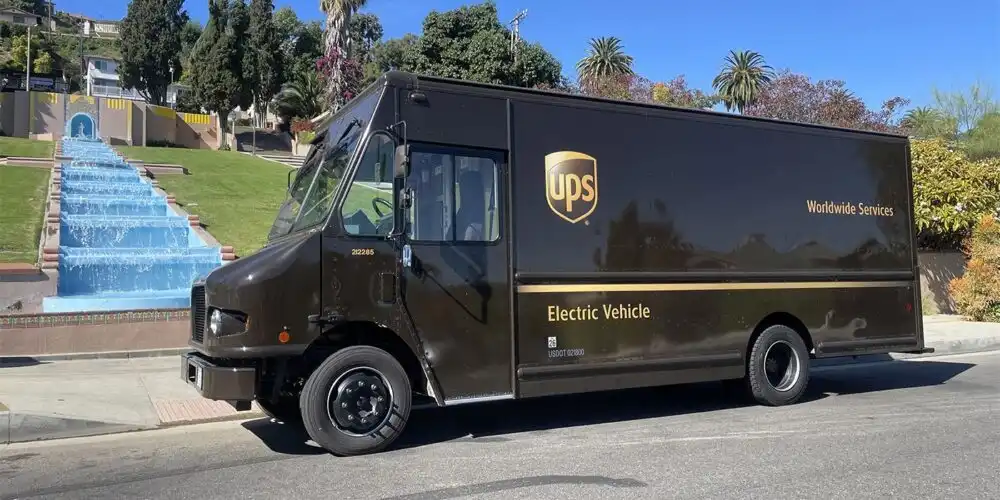
The company is also rethinking its fleet, including a slow shift toward electric delivery vans that promise lower running costs over time. None of this is cheap, and the savings arrive gradually while the competitive pressure is immediate. That mismatch, big spending now for efficiency later, is the tightrope management has to walk.
Two strategies, one prize
What separates the rivals now is less about trucks than about philosophy. UPS is trying to become smaller but richer, shedding low value parcels to lift its profit on each one and protect its margins. FedEx is trying to become simpler and leaner, merging its networks to cut overlap and win share. Both are reasonable answers to a brutal market, and both carry risk. Shrink too aggressively and UPS could hand growth to its rivals. Chase volume too hard and FedEx could erode the very profits it is fighting for.
What it means for the rest of us
For shoppers and businesses, sharper competition between the two should be welcome. When carriers fight for parcels, prices stay in check and service tends to improve, from tighter delivery windows to better tracking. The danger is in the long run. A weakened UPS, or a price war that bleeds both companies, could eventually mean fewer choices and higher costs once the dust settles.
For now the contest is wide open. The brown trucks are not going anywhere, and UPS still moves a staggering share of the world's packages every day. But the era when it could assume it was the undisputed leader is over. The company that taught the world how to deliver is learning, a little late, that it has to keep proving it.