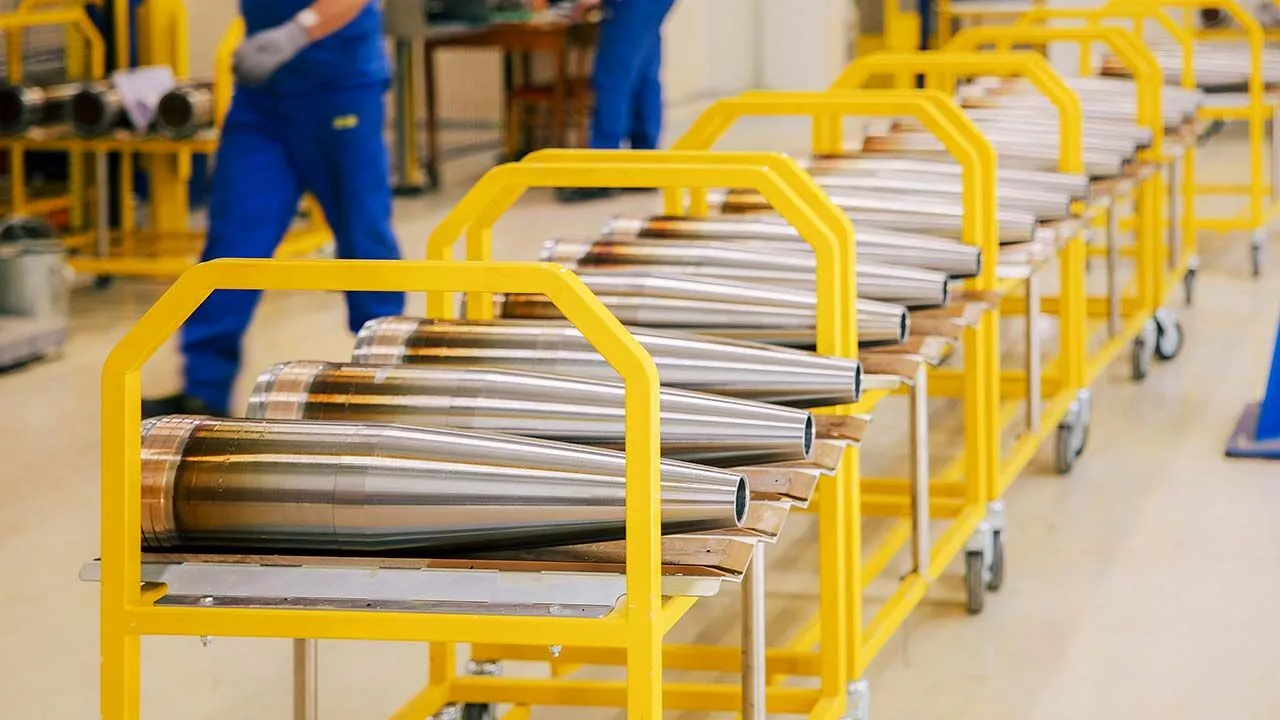
For three years the surest trade in Europe was war. From the moment Russian tanks crossed into Ukraine in February 2022, the shares of the companies that build shells, howitzers and armoured vehicles climbed with a conviction the rest of the market could only envy. A basket of the continent's aerospace and defence names rose more than 450 percent over that stretch, while the broad European index managed something closer to 40. Then, quite suddenly, the certainty began to drain away.
The turn has been sharp enough to unsettle anyone who assumed the boom was permanent. In March the main gauge of European aerospace and defence stocks dropped 9.2 percent, its worst month in five years. Since the flare up between Israel and Iran at the end of February, Rheinmetall, long the sector's standard bearer, has slipped about 10 percent. Renk has fallen a similar amount, Sweden's Saab around 12, and the Czech group CSG has shed roughly a third of its value. The war winners are being reassessed.
A run priced to perfection
Part of the story is simply arithmetic. By the time the latest crisis arrived, the sector was changing hands at close to 29 times forecast earnings, near a record set late last year. At that price the market had already banked years of rising budgets in advance, which left very little room for disappointment when it came. It came anyway, in the form of first quarter results from the biggest names that landed below what investors had talked themselves into expecting.
Analysts describe the retreat less as panic than as a crowded room emptying in an orderly fashion. Martin Frandsen of Principal Asset Management points to a wave of de grossing, the unwinding of positions by institutions and retail buyers alike who had piled in and now want to trim their exposure. Aarin Chiekrie at Hargreaves Lansdown puts it plainly, arguing that a decade of higher defence spending was already written into the prices, so the news that budgets are indeed rising is no longer news at all.
The order books that did not fill fast enough
There is a practical worry underneath the valuation math. The promised flood of contracts has arrived as more of a steady drip. Morgan Stanley has noted that order intake has run slower than many investors expected, with deals delayed or split into phases as governments in France and Britain wrestle with their own strained budgets. A political pledge to spend, it turns out, is not the same thing as a signed purchase order, and the gap between the two is where share prices go to cool.
The deeper question is whether the weapons Europe has been buying are the ones the next war will actually need. The fighting in Ukraine and the exchanges over the Gulf have made the point in the bluntest possible terms. When a defender is firing interceptors that cost around four million dollars apiece at drones that cost a tiny fraction of that, the economics of the battlefield start to favour the cheap and the disposable over the heavy and the expensive.
Where the enthusiasm went
That is why the same investors backing away from tank makers have been sprinting toward a different kind of arms firm. In July, Helsing, a Munich company that did not exist before 2021, raised 1.8 billion dollars in the largest funding round a European defence startup has ever pulled off. The deal valued it at 18 billion dollars, up from the 12 billion euros it commanded only a year earlier, and put a five year old software house among the most valuable defence names on the continent.
Helsing does not stamp out steel. It builds artificial intelligence for the battlefield, from its Altra software for coordinating operations to its HX-2 strike drone and a proposed autonomous fighter concept. Its backers read like a roll call of ambition, with Lightspeed and General Catalyst joining earlier investors such as Prima Materia, Accel and Greenoaks, and a board that pairs the Spotify founder Daniel Ek with the former Airbus chief Tom Enders. Crucially, the company works alongside the old guard rather than only against it, wiring its systems into products made by Rheinmetall, Saab and Kongsberg.
A rotation, not a retreat
It would be a mistake to read the sell off as a loss of faith in European rearmament. The money tells a more precise story. The WisdomTree Europe Defence exchange traded fund has taken in about 1.32 billion dollars this year, including some 377 million since the latest crisis began, which is not the behaviour of investors fleeing the theme. What has changed is the shape of the bet. Rheinmetall itself has read the memo, signing a deal with the American firm Anduril to build European versions of its Barracuda and Fury drones.
The lesson forming in the market is that the defence trade has matured past its first, indiscriminate phase, when almost anything with a barrel or a hull went up together. Investors are now sorting the industry into the parts they think will define the coming decade and the parts they think belong to the last one. The budgets are real and still growing. The winners, the market is beginning to insist, will not be the same as the ones who led the charge.