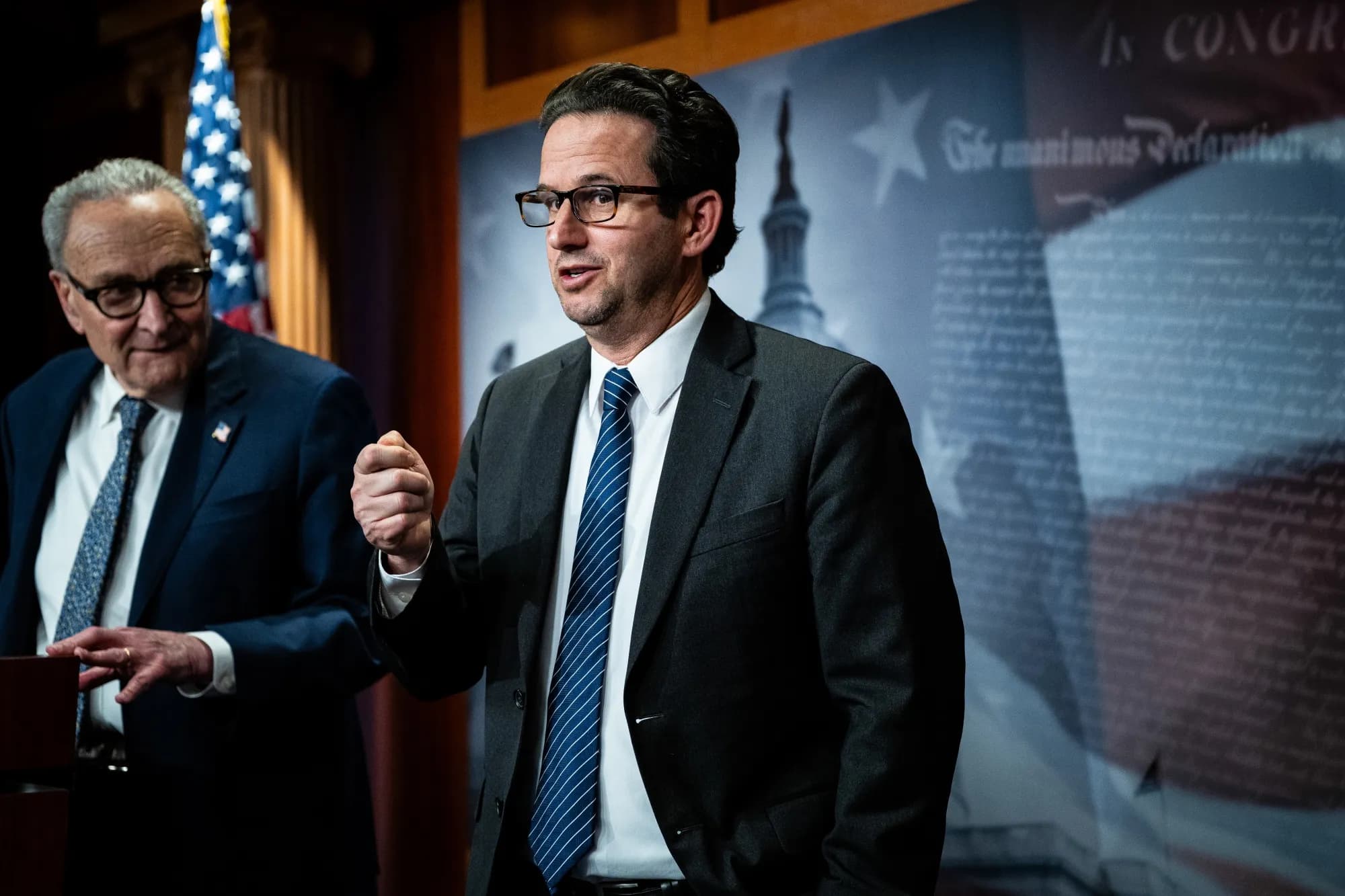
Leadership races in the Senate usually take years of quiet lobbying before anyone outside Washington notices. Brian Schatz of Hawaii skipped most of that waiting period. Within weeks of Dick Durbin announcing he would not seek reelection in 2026, ending a two decade run as the chamber's second ranking Democrat, Schatz had already assembled the support needed to replace him, running essentially unopposed for a job that will not formally change hands until after the midterms.
A fast, methodical campaign
Schatz, 52, built his coalition early and publicly. He picked up endorsements from Cory Booker, Mark Kelly, Jacky Rosen, John Fetterman, Martin Heinrich, Ben Ray Lujan, Raphael Warnock and his fellow Hawaii senator Mazie Hirono, a spread that crosses the caucus's generational and ideological lines rather than leaning on any single wing of the party. The decisive moment came when Senate Democratic Leader Chuck Schumer endorsed him as well, an intervention that effectively closed the race before any rival could mount a serious challenge.
Filling a job held for two decades
Durbin, 80, has served as Senate Democratic whip for twenty years, making him one of the longest serving vote counters in either party. His decision to step aside opened one of the few genuine generational transitions available inside a Senate Democratic caucus whose most senior figures have held their posts for a very long time. Schatz already serves as chief deputy whip, the role that traditionally positions its holder as heir apparent, and he has spent his Senate career building a reputation as a reliable liberal vote with a particular focus on climate and renewable energy legislation.
From Honolulu to the Senate floor
Schatz's own path to Washington ran through Hawaii politics rather than national fame. Born in Michigan, he moved to Hawaii as a toddler, studied philosophy at Pomona College, and worked in the nonprofit sector before entering the Hawaii House of Representatives in 1998. He went on to chair the state Democratic Party, serve as lieutenant governor, and was sworn into the Senate in December 2012 following the death of Daniel Inouye, a seat he then held onto in a competitive 2014 special election.
In a caucus known for holding onto power for decades, moving first and moving fast has turned out to be its own kind of leverage.
What the job means beyond the title
The whip's job is nominally about counting votes and holding the caucus together on close roll calls, unglamorous work compared with the leader's public role. But the position has historically doubled as the Senate's most direct training ground for the top job, and Schumer's own path to the leadership ran through the same office. Locking up the endorsement of the sitting leader this early does more than clear Schatz's path to succeed Durbin. It positions him as the most obvious successor whenever Schumer himself eventually steps aside, a prospect that is likely still years away but one that Washington has already started discussing.
The formal vote to replace Durbin will not happen until Democratic senators organize their caucus after the 2026 midterm elections. By securing his support months ahead of that vote, Schatz has effectively turned what could have been a competitive race into a formality, a sign of how much leverage early, coordinated support from colleagues can carry inside a chamber that still runs largely on seniority and personal relationships.