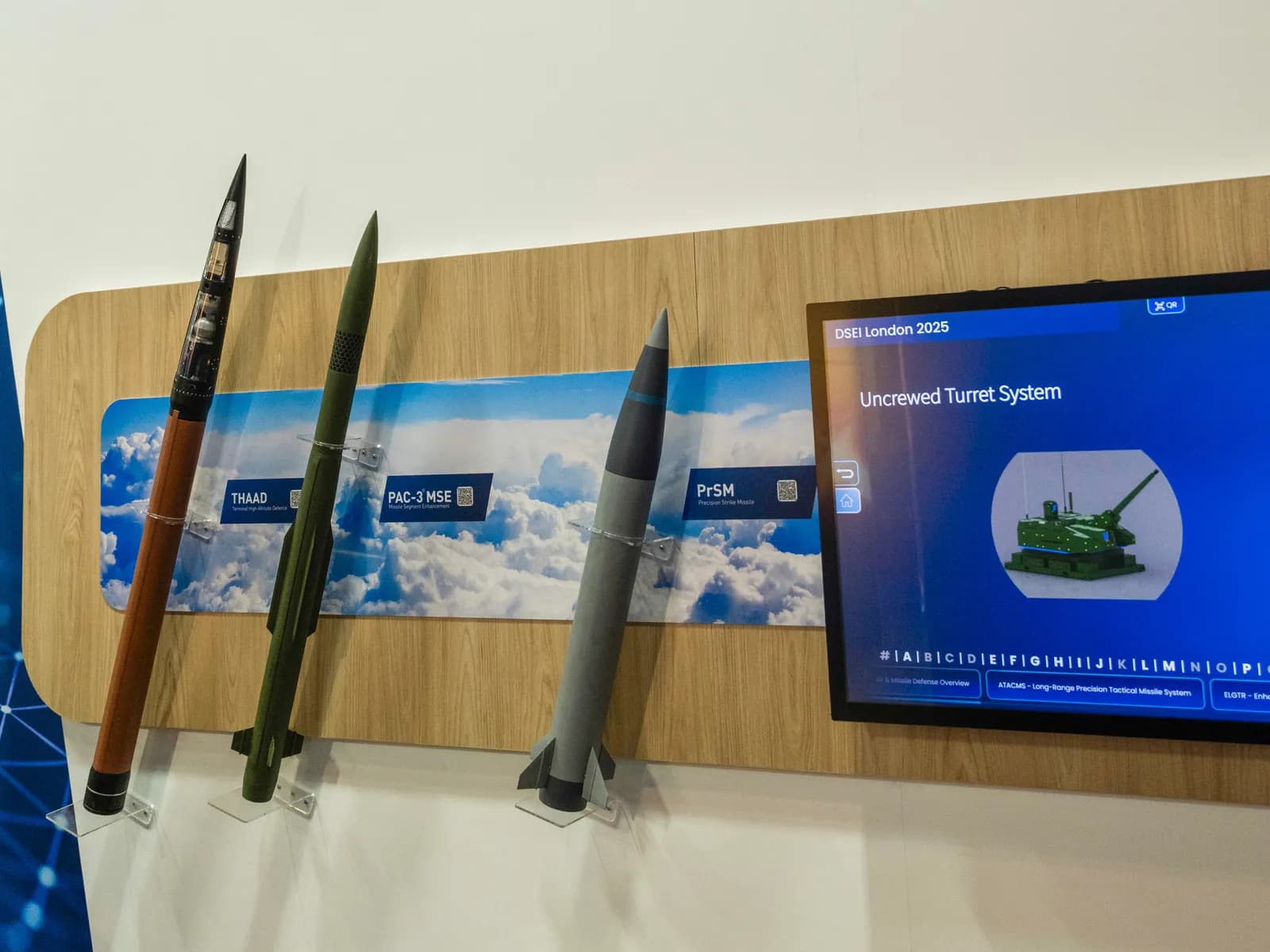
For decades, Western military planners built their war games on a comfortable assumption: that the missiles built to shoot down other missiles would always be sitting in the depot when needed. By the middle of 2026 that assumption has broken down. American stockpiles of Patriot interceptors have fallen to roughly a quarter of the level the Pentagon considers the safe minimum, and the global order book for replacements now runs to more than 4,300 rounds, close to seven years of output at the pace factories were running before the crunch began.
A war that emptied the depots
The immediate cause was a five day exchange with Iranian forces in March, during which American batteries fired more than 800 interceptors. That single engagement is estimated to have consumed roughly two thirds of the Patriot inventory the United States held before the fighting started. Allied stocks were drawn down alongside it, and of NATO's members only Poland came through the episode with its arsenal largely intact. Years of shipments to Ukraine had already thinned the cupboard. Kyiv has received only around 600 of the advanced PAC-3 MSE interceptor in four years of full scale war, less than the roughly 620 units delivered to every customer worldwide in 2025 alone.
Everyone wants the same missile
The scarcity is not just an American problem or a Ukrainian one. Israel, Gulf states and Asian allies operating Patriot and THAAD batteries are all competing for space in the same production queue, at the same moment that Washington needs to rebuild its own reserves for a potential future confrontation with a major power. Analysts who study the Pacific balance have warned that the current interceptor count is too thin to give the United States confidence in a prolonged missile exchange, a concern that predates the Iran episode and has only sharpened since.
Why factories cannot simply speed up
Interceptors are not built the way rifles or artillery shells are. A single PAC-3 MSE round depends on a chain of specialised suppliers producing rocket motors, seeker electronics and guidance hardware, few of which have spare capacity sitting idle. Adding a shift on a final assembly line does little if the company making the seeker or the solid fuel motor is already running flat out. Expanding that supply chain means qualifying new subcontractors, building new tooling and, in some cases, constructing entirely new plants, work measured in years rather than weeks.
A stockpile built up over thirty years can be spent in an afternoon. Rebuilding it happens on the calendar of a factory, not the calendar of a war.
The industrial response
Lockheed Martin says it is on track to roughly triple annual PAC-3 MSE production by 2030, lifting output from about 600 missiles a year to around 2,000. The Pentagon has struck framework agreements with Lockheed and Northrop Grumman aimed at expanding the components that most constrain the line, with a parallel goal of quadrupling annual THAAD output. In July, the Army awarded Raytheon a $441.6 million contract modification to build new PAC-2 GEM-T interceptors, the first fresh domestic order for that older variant in more than thirty years. In Bavaria, Raytheon and the European group MBDA are finishing a new Patriot missile factory in Schrobenhausen, construction that began in late 2024 and is due to be completed this autumn.
Allies look for workarounds
With American factories unable to close the gap quickly, allies are improvising. Ukraine is developing its own FP-7.x interceptor rather than wait solely on Western supply, and Ukrainian and American engineers have been reviving older Soviet-era S-300 systems to stretch what air defence coverage remains. A promised American license letting Ukraine build Patriot interceptors on its own soil has stalled, with Lockheed Martin and Raytheon reportedly hesitant to move ahead while questions remain about financing and security guarantees for the production line itself.
None of the fixes on the table close the gap this year or next. Even the most optimistic production targets land at the end of the decade, which leaves a stretch of several years in which the West's ability to shoot down an incoming missile will depend less on how many interceptors a factory can build and more on how carefully each remaining one gets rationed.