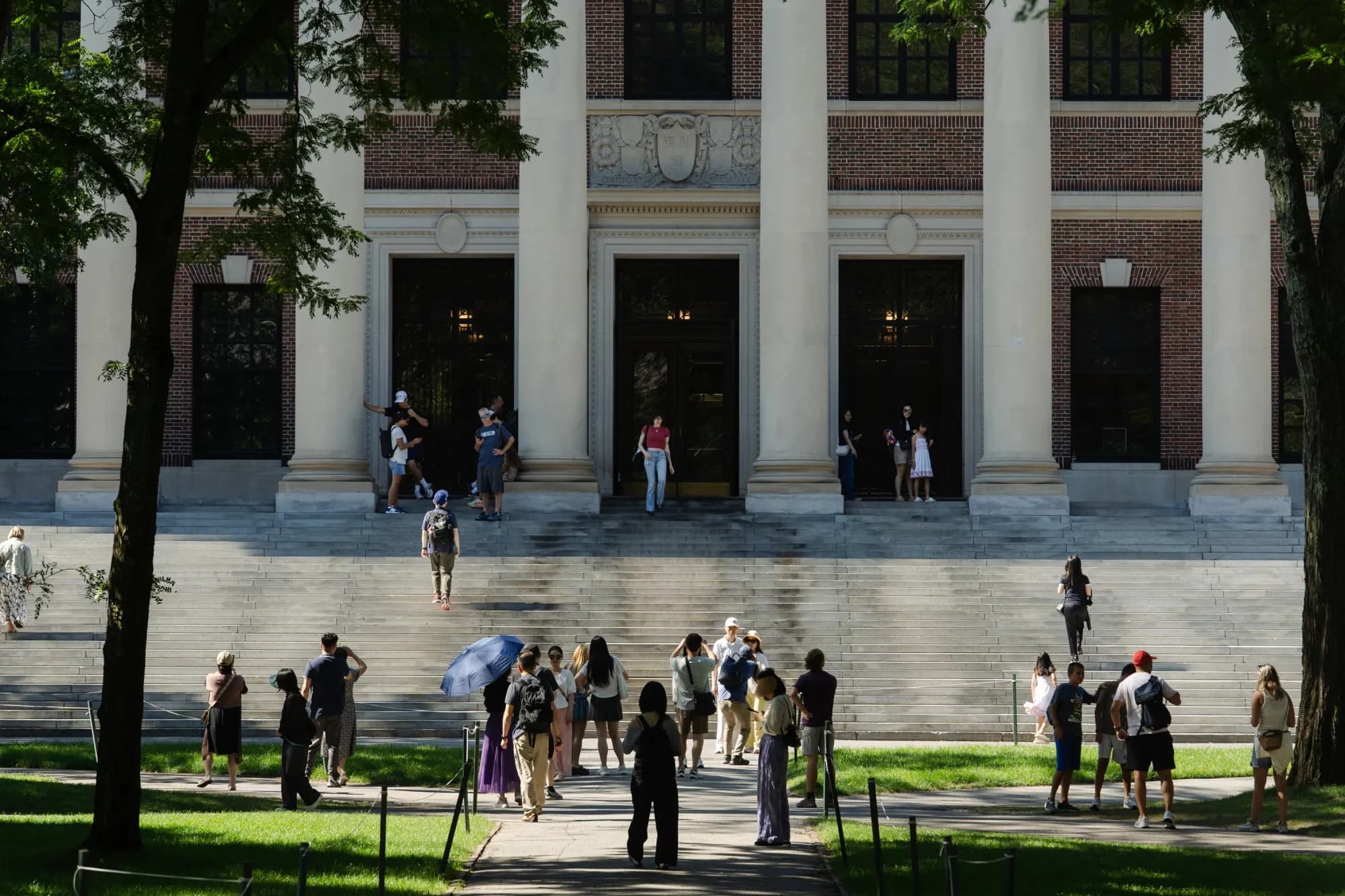
Harvard University's prolonged confrontation with the Trump administration is proving costly even as the school notches victories in court, according to NYT US. Despite winning key legal rulings against federal actions targeting its funding, the university has found that litigation success has not translated into a swift return to normal financial operations, leaving administrators to grapple with a slower and more complicated funding picture than they had hoped for.
The dispute traces back to a broader campaign by the administration to pressure elite universities over their handling of campus speech, admissions practices, and other politically charged issues. Harvard emerged as one of the most prominent targets, and also one of the most willing to fight back through the courts rather than negotiate a settlement, a stance that set it apart from some peer institutions that chose to reach agreements with Washington.
According to NYT US, the practical effect of the standoff has been a slowdown in the flow of federal research funding and other financial support to the university, even where courts have ruled in Harvard's favor. Legal wins have not automatically unlocked frozen or delayed money, and the bureaucratic machinery involved in restoring funding appears to move far more slowly than the machinery that cut it off in the first place.
That gap between legal victory and financial reality is now forcing Harvard administrators into difficult budgetary decisions. Universities of Harvard's size rely heavily on a steady stream of federal grants, particularly for scientific and medical research, and any prolonged disruption ripples through laboratories, hiring plans, and long term projects that depend on predictable funding cycles.
The financial squeeze also arrives against the backdrop of Harvard's enormous endowment, which has often been cited in public debate as a resource the university could draw on to weather short term shocks. But endowment funds are typically restricted for specific purposes and are not a simple substitute for federal research dollars, meaning the institution cannot easily plug funding gaps by tapping that wealth at will.
The standoff carries implications well beyond Harvard's own campus. Other universities have been watching closely to see whether a strategy of legal resistance pays off compared with negotiated settlements, and the outcome could shape how higher education institutions across the country respond to similar federal pressure in the future.
For the Trump administration, the fight over Harvard's funding has served as a highly visible test case in its broader effort to reshape the relationship between the federal government and higher education, particularly around issues it has framed as concerns about ideological bias and institutional accountability on campus.
Faculty, students, and researchers at Harvard are left navigating considerable uncertainty in the meantime. Delays in grant funding can stall research timelines, complicate the recruitment and retention of scientists, and create anxiety among graduate students and postdoctoral researchers whose work and funding often depend directly on federal support.
Legal experts have noted that even favorable court rulings often come with narrow scope, addressing specific violations or procedural failures rather than compelling wholesale restoration of funding relationships. That leaves room for federal agencies to slow walk compliance or find alternative administrative avenues to continue withholding support, prolonging the financial strain on the university even after it wins in court.
The episode also highlights a broader tension in how disputes between the federal government and independent institutions play out in practice. Winning in court is often treated as the definitive resolution to such conflicts, but as Harvard's experience shows, a legal victory does not necessarily translate into an immediate practical remedy, especially when funding decisions pass through layers of federal bureaucracy that can move at their own pace.
As the fight continues, Harvard faces the challenge of managing both its public standing and its internal finances simultaneously. University leaders must weigh how aggressively to continue challenging federal actions in court against the mounting costs of prolonged uncertainty, a balancing act that will likely shape decisions on campus for months to come.
With no clear end in sight, the confrontation between Harvard and the federal government stands as a striking illustration of how political and legal battles over higher education policy can extract a real financial toll, regardless of who ultimately prevails in the courtroom.