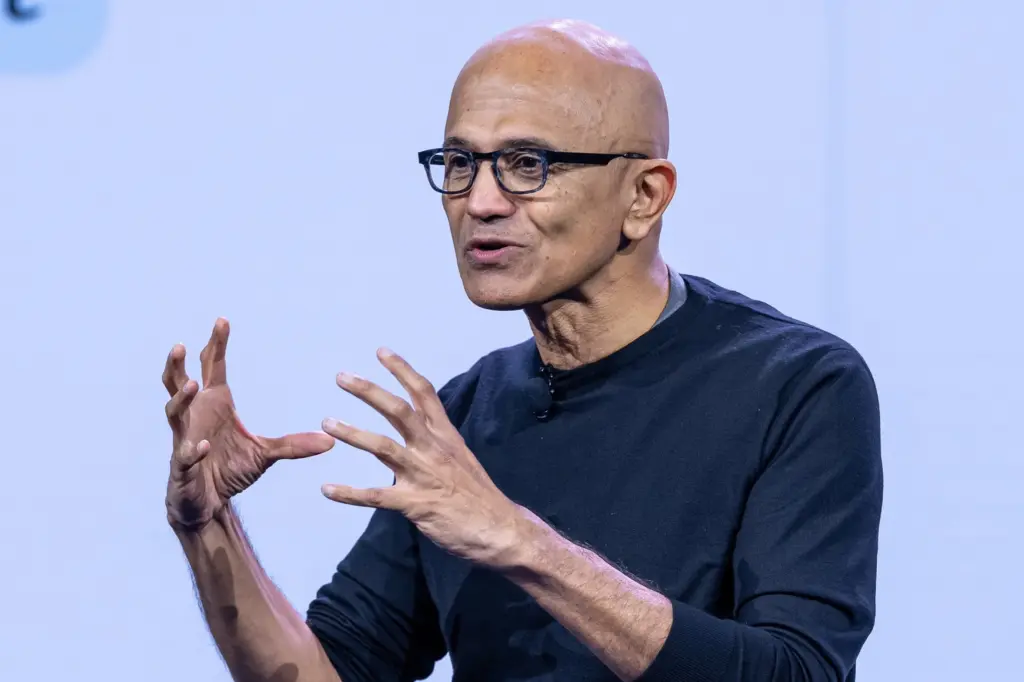
Microsoft chief executive Satya Nadella has pointed to a single meeting, roughly 2008 or 2009, as the moment that still shapes how he leads the company today, and it is not a story about a deal that worked. It is a story about one that should never have happened, and about his own silence while it was being decided.
A deal he knew was wrong, and said nothing
At the time, Nadella was running Microsoft's search engine division and sat in on a review, chaired by Bill Gates, of a proposed acquisition involving a parallel data warehousing team. By his own account, he thought the logic behind the deal made no sense for where the technology was heading. He has since described his private verdict on it in blunt terms, calling it architecturally stupid for that moment in time. He kept that view to himself, sat through the rest of the discussion, and walked out feeling the entire meeting had been a waste.
The regret that outlasted the deal
The acquisition itself has long since faded into Microsoft's history, but Nadella says the memory of staying silent has not. He has described being haunted by the thought that in any given review, there may be someone in the room who can see the future more clearly than the people making the call, and who simply does not say so. For a CEO who now sits atop one of the most valuable companies on earth, the lesson was not about the specific product decision. It was about what gets lost when the right instinct never leaves the room it was formed in.
What Ballmer taught him instead
Nadella credits his predecessor, Steve Ballmer, with giving him the opposite instinct, something closer to an owner mindset. The idea was not to think only about the piece of the business a given executive was responsible for, but to weigh every decision against what actually benefits the company as a whole, even when that means pushing back on a plan outside your own lane. It is a framework Nadella says reshaped how he approaches leadership once he had the authority to act on it.
The question Nadella says he now asks of Microsoft's culture is not whether people can do their jobs well, but whether they feel safe enough to say out loud when they think the company is about to make a mistake.
Turning a personal regret into company policy
Running a company now valued at roughly 4 trillion dollars, Nadella frames the challenge less as a matter of hiring smart people and more as a matter of building an environment where those people feel safe enough to contradict the room. He has described the real difficulty as orchestrating that kind of candor so it becomes a consistent norm across a massive organization, rather than something that only happens when a leader happens to ask the right question at the right moment.
That emphasis puts Nadella in company with other prominent executives who have made dissent an explicit part of how they run their organizations. Netflix co-founder Reed Hastings has long encouraged employees to voice disagreement openly rather than defer silently to management, and Bridgewater Associates founder Ray Dalio built an entire investment firm around the principle that radical transparency and open challenge produce better decisions than polite agreement ever could.
For Nadella, the throughline back to that meeting with Gates is simple enough to state even if it is hard to institutionalize: the cost of being right and silent can end up indistinguishable from the cost of being wrong.