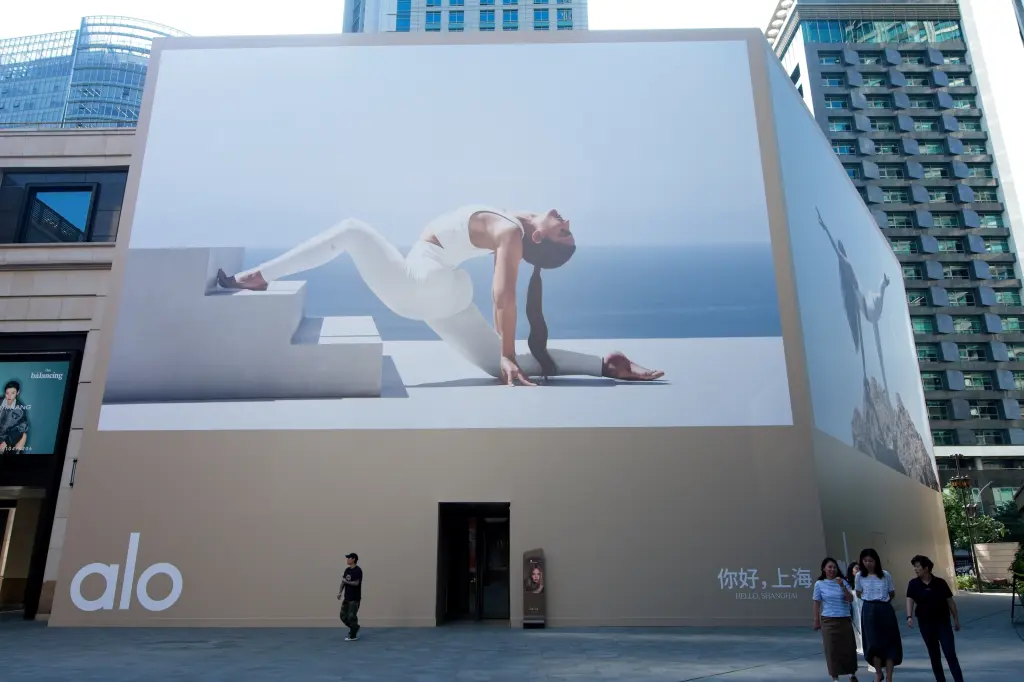
Alo Yoga's first official storefront in China opened on Tmall on August 12, and within the first minute of sales it had already brought in more than 10 million yuan, roughly 1.5 million dollars. The number stands out mainly because of when it happened, in the middle of one of the weakest stretches for Chinese consumer spending in years.
A market that is not spending
China's retail sales rose just 0.4 percent year over year in August, about half of what economists had expected, while second quarter GDP growth came in at 4.3 percent, the slowest pace in more than three years. Even Lululemon, which already operates 174 stores across mainland China, reported an 8 percent decline in comparable sales in its most recent fiscal quarter. The established leader in the exact category Alo is now entering is currently losing ground in that same market.
A playbook built before the store even opened
Alo's launch was not a single event so much as the final step in months of preparation. The brand launched official Chinese social media accounts back in June, then ran an eight week community program in Shanghai to build a following before it sold a single item. Marketing leaned on actress Zhao Lusi, actor Wang Yibo and supermodel Sui He, a Victoria's Secret veteran. By the time the Tmall storefront actually went live, content tied to the brand had already collected 240 million views on the social platform RedNote.
Fashion pieces outsold the gym staples
The top selling item was not a core piece of activewear but a pair of Suit Up trousers priced at 1,150 yuan, about 170 dollars, which sold more than 10,000 units. A sneaker priced at 1,750 yuan, roughly 260 dollars, sold over 3,000 pairs. Early demand skewing toward fashion pieces rather than performance gear suggests Chinese shoppers are approaching Alo more as a lifestyle label than a workout brand, a distinction the company appears to be leaning into rather than fighting.
Nine stores, seven cities
Alo plans to open nine physical stores across greater China by 2027, spanning Shanghai, which will get two locations, along with Beijing, Hong Kong, Macau, Shenzhen, Chengdu and Hangzhou. Benedetta Petruzzo, Alo's international chief executive and a former managing director at Dior, has called China the most important market the brand is about to enter.
Our ambition goes beyond opening stores: we are building an Alosphere.
That line, from Petruzzo, captures the broader bet Alo is making, that months of social media groundwork and celebrity marketing can build the kind of following a storefront alone never could, especially in a market where shoppers have shown they still have money to spend, just not much patience for brands that have not bothered to earn their attention first.