Ohio's Tenth District Court of Appeals ruled on October 15 that the state's EdChoice voucher program is unconstitutional, upholding a lower court decision from June 2025 and setting up a fight that will now land at the Ohio Supreme Court. At stake is a program that spent 776 million dollars in fiscal 2025 and currently serves more than 140,000 students across the state.
A parallel system, built with public money
The appeals court's core finding was that EdChoice effectively uses taxpayer funds to build what it described as a separate system of non-public schools, one that operates alongside the public system while draining resources from it. Of the 776 million dollars spent last year, about 492.7 million went to the EdChoice Expansion track and roughly 283.1 million to the original, more narrowly targeted EdChoice program.
Different rules for who gets in
Central to the court's reasoning is a basic asymmetry between the two systems. Public schools in Ohio are required to educate every eligible child who walks through the door, including students with behavioral challenges, disabilities, or struggling academic records. Private schools accepting voucher students face no such obligation and can decline to admit those same students. The court treated that gap as more than a technicality, framing it as evidence that the two systems are not actually offering families an equivalent choice.
Where the money actually goes
The geography of the program drew particular scrutiny. Forty four percent of the private schools participating in EdChoice are concentrated in just three counties, Cuyahoga, Franklin and Hamilton, meaning the benefits of the program are heavily clustered rather than spread evenly across the state. Meanwhile, state funding to public schools has fallen short of what Ohio's own formula calls for, with the state providing 7.1 billion dollars against a required 7.8 billion, a gap the court's ruling connects directly to vouchers and public education competing for the same pool of money.
The ruling also pointed to a pattern that undercuts one of the program's central justifications. Among first-time users of the EdChoice Expansion track, only 24 percent were students actually leaving a public school for a private one. The other 76 percent were new to the private school system entirely, meaning most of the voucher money is subsidizing families already enrolled in private education rather than offering an alternative to a public school seat.
A political fight, not just a legal one
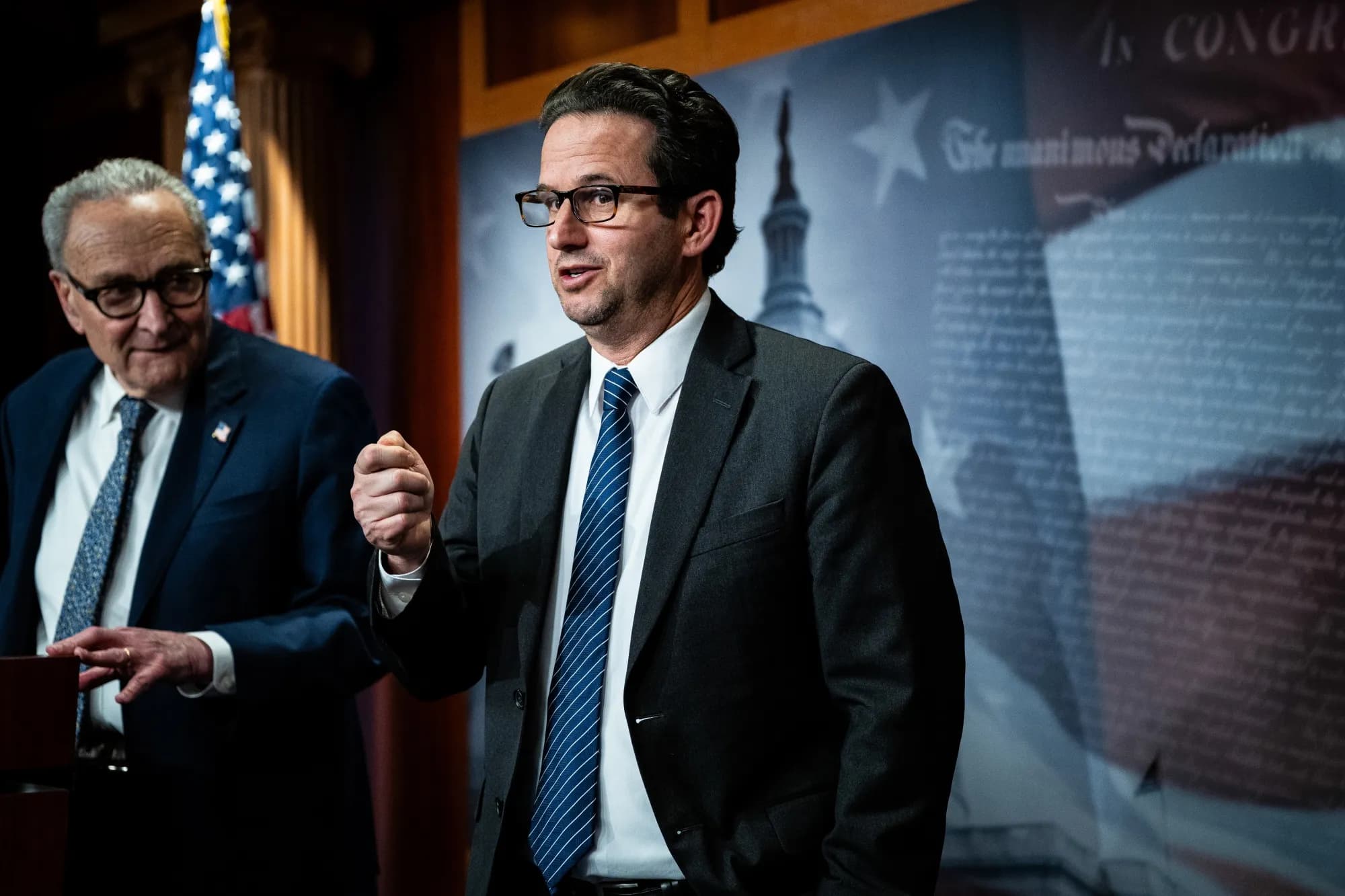
Ohio Attorney General Andy Wilson, defending the program, rejected the idea that vouchers come at public schools' expense, saying flatly that the current system does not hurt public education and arguing families deserve the right to choose where their children are educated. State Senator Willis Blackshear took the opposite view, calling the ruling a major step in the right direction and criticizing the program for funneling public dollars toward what he described as exclusionary, often for-profit, private schools.
For now, the practical effect on families is minimal. The ruling remains on hold while the case heads to the Ohio Supreme Court, and EdChoice continues operating in the meantime. But the decision puts a dollar figure and a legal theory behind an argument that has simmered in Ohio politics for years, and it sets up a Supreme Court case that could reshape how much of the state's school funding keeps flowing to private classrooms.