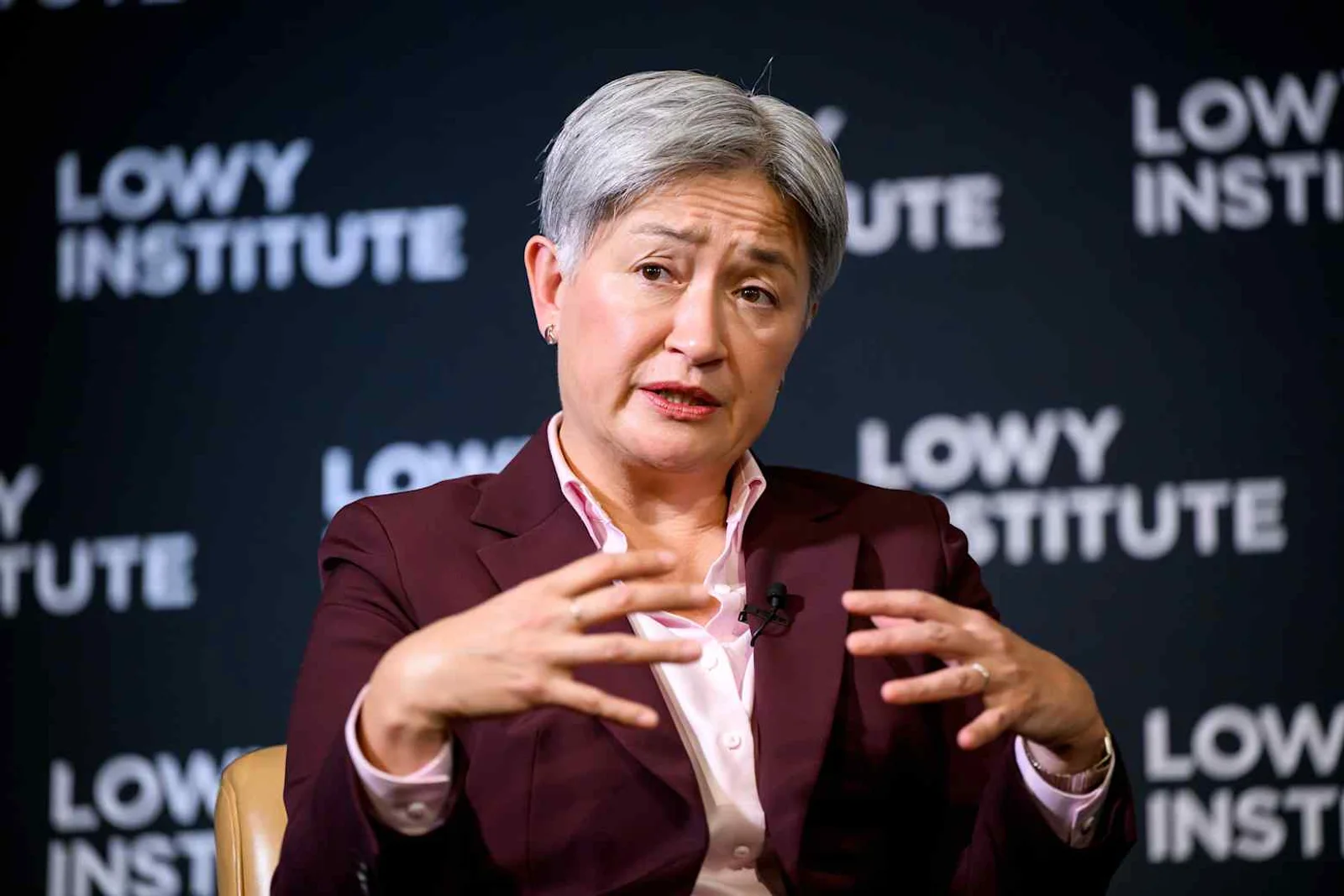
Penny Wong has spent her career as living proof of the argument she made this week. Born in Malaysia, the first Asian Australian to sit in a federal cabinet, Australia's foreign minister embodies the multicultural country she was defending, and she used a set piece speech in Sydney to warn that those who would unpick it threaten not only social peace at home but the nation's very place in the world.
The occasion was the Allan Gyngell Lecture at the Lowy Institute, delivered on Friday, and the target, though rarely named directly, was unmistakable. Wong took aim at the resurgent hard right, and in particular at the call from Pauline Hanson's One Nation for what it frames as a return to a single national culture. That vision, Wong argued, rests on a fantasy, and a costly one, because the Australia it imagines has never actually existed.
The cost of turning inward
Her central claim was that diversity is not a threat to Australian strength but a source of it. The ability of Australians to connect with people from every corner of the earth, she said, is a national asset, one that expands the country's choices in the world rather than narrowing them. A nation woven from many origins can talk to many partners, and in a region as varied as the Indo Pacific that reach is not sentiment. It is strategy.
Against that she set the alternative in stark terms. The demand for a monoculture, she warned, was a call for Australia to curtail its choices and to cut off its connections, one that would leave the country with, in her words, no friends to work with, no partners to trade with, and no opportunities to grow from. To retreat into a narrow idea of who counts as Australian, she suggested, would be to shrink the country's horizons at the exact moment it most needs them wide.
A fantasy with a history
Wong reserved some of her sharpest language for the nostalgia underpinning the hard right's appeal. She called the idea a melancholic fantasy, a longing for a homogeneous past that never was, and insisted that a multicultural Australia is the only Australia that has ever existed. It was a deliberate inversion of the nationalist story, which treats diversity as a recent and reversible imposition rather than the country's founding condition.
That framing carries particular weight coming from her. For a politician who is herself the product of migration to stand before a foreign policy audience and describe openness as the national interest is to fuse the personal and the strategic in a way few of her colleagues could. Her own biography turns an abstract argument about cohesion into something harder to dismiss as mere political correctness.
The audience abroad
What lifted the speech beyond domestic politics was its insistence that the world is watching. Australia's neighbours and trading partners across Asia, Wong implied, take note of how the country treats people who look like them, and a lurch toward exclusion at home would be read abroad as a signal about who Australia really is. A government that courts investment and partnership in the region while tolerating a politics of racial grievance at home invites a charge of hypocrisy that its rivals would be glad to press.
She warned too of forces, both external and internal, seeking to divide the country, language that placed domestic populism in the same frame as the disinformation and interference that democracies increasingly worry about. The implication was that a fractured, suspicious Australia is not only unhappier but weaker, easier to unsettle from outside precisely because it is already unsettled within.
A contest still open
None of this means the argument is won. The very fact that a foreign minister felt compelled to devote a major address to the danger is a measure of how much ground the hard right has gained, in Australia as in much of the democratic world. Warnings about cohesion tend to land best with those already persuaded, and the voters drawn to One Nation's message are unlikely to have been in the room at the Lowy Institute.
Still, Wong has planted a flag. By casting multiculturalism not as a matter of tolerance to be defended on moral grounds but as a hard headed national advantage to be protected on strategic ones, she has tried to shift the terms of the debate onto ground where her side is stronger. Whether that reframing can outrun the politics of grievance is the open question. For now, Australia's most senior diplomat has made her position plain, and staked the country's standing in Asia on the answer.